Product Description
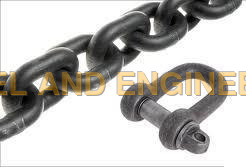
Nickel Alloy Chain is highly appreciated for having great structural strength, ductility, corrosion resistance, and tensile strength. It is extensively utilized for construction & architectural sectors, logistics, dockyards, & warehouses for holding large amount of weight. This chain is known to have shiny silver colored surface finish with great wear & abrasion resistance. It has been made using technologically advanced machines for assuring utmost structural precision. Nickel Alloy Chain is considered to be harder than iron and shows no reaction to oxygen thus ensuring high durability. It is available in different dimensional configurations according to specific load bearing abilities.
Unmatched Corrosion ResistanceCrafted from premium nickel alloys such as Ni200/Ni201, these chains reliably withstand corrosive environments including exposure to acids and alkalis. Their resilience ensures long-term performance in chemical, marine, and industrial applications, minimizing the risk of degradation and failure over time.
Precision Engineering and CustomizationManufactured by precision forging and welding, each chain delivers consistent strength and dimensional accuracy (tolerance 0.1 mm). Customers may specify diameter (2 mm to 40 mm), length, thickness, and outer diameter to match operational requirements, supported by a choice of finishes: polished or matte silver.
Versatile Industrial ApplicationsDesigned for demanding settings, nickel alloy chains serve in lifting, rigging, conveying, and marine operations where high strength, excellent flexibility, and temperature resistance up to 1200C are critical. Their welded round links and nickel-plated coating optimize durability for daily industrial use.
FAQs of Nickel Alloy Chains:
Q: How do nickel alloy chains offer excellent corrosion resistance in acids and alkalis?
A: Nickel alloy chains are composed of specialized grades such as Ni200 or Ni201, which possess innate resistance to corrosive chemicals. This makes them effective in environments where acids and alkalis are present, preserving chain integrity and function.
Q: What manufacturing process is used for these chains to ensure precision and durability?
A: These chains are produced through precision forging and welding, ensuring consistent mechanical properties, dimensional accuracy, and strong welded links. This method reduces defects and enhances both durability and overall chain performance.
Q: When is it advisable to use nickel alloy chains over other types in industrial applications?
A: Nickel alloy chains are recommended for operations requiring high corrosion resistance, non-magnetic properties, and reliability under elevated temperatures up to 1200C. They perform exceptionally well in chemical plants, marine environments, and specialized lifting operations.
Q: Where can these chains be applied for optimal performance?
A: Due to their robust nature and resistance to corrosion, nickel alloy chains are best utilized in marine, chemical, lifting, rigging, and conveying applications where conventional chains may deteriorate under harsh conditions.
Q: What are the customization options available for these nickel alloy chains?
A: Clients can customize chain dimensions, including diameter (from 2 mm to 40 mm), length, thickness, and outer diameter. Surface finishing choices (bright polished or matte) and packing types (wooden drum, reel, or coil) cater to specific operational needs.
Q: How does the chains non-magnetic property benefit industrial usage?
A: The non-magnetic nature of nickel alloy chains prevents magnetic interference in sensitive environments, such as chemical and electronics industries, ensuring smooth operation and safety around electromagnetic equipment.
Q: What is the benefit of choosing a precision forged and welded nickel alloy chain for lifting and marine operations?
A: Precision forging and welded connections maximize load capacity, flexibility, and tensile strength (up to 800 MPa), providing reliable performance and superior safety. The chains can handle custom bends, high stress, and tough environments with minimal elongation at break (35%).







 Send Inquiry


 Send Inquiry
 Send SMS


