Product Description
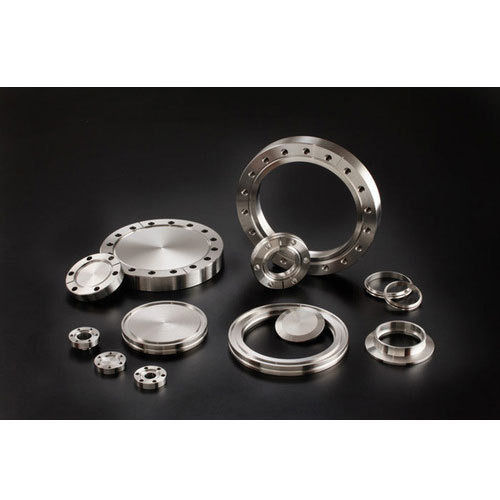
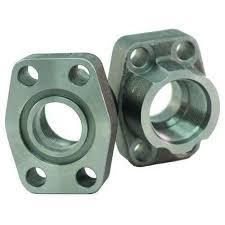
Vacuum Flanges
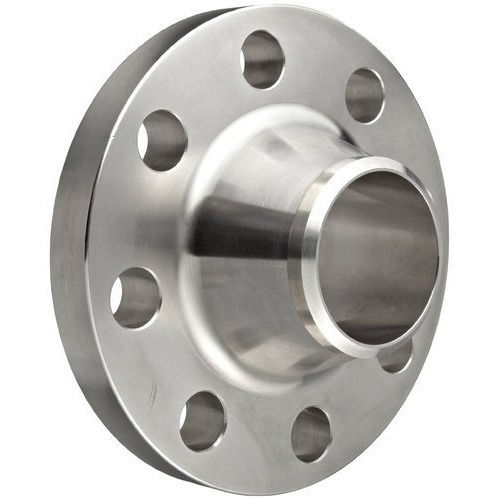
It is possible to link vacuum chambers, tubing, and vacuum pumps to one another using a vacuum flange located at the end of the tube. In scientific and industrial applications, our flanges are used to connect various pieces of equipment through physical connections and for vacuum monitoring, manipulation, and maintenance from outside of a vacuum chamber's enclosed environment. Several Vacuum Flanges standards are available, each with a different maximum pressure that may be achieved, a different size, and further ease of attachment.
Superior Vacuum IntegrityWith a leak rate of 110 mbarl/s and robust compatibility with UHV systems, these flanges ensure reliable vacuum integrity under stringent operating conditions. Precision-machined from premium-grade SS 304/316L, each flange is finished with a polished, smooth surface, bolstering both performance and cleanability for high-demand environments.
Versatile Connection OptionsVacuum Flanges accommodate bolt, weld, and quick-clamp styles, making them suitable for a wide range of vacuum systems. Their design allows for seamless integration with different pipe sizes and types, providing plug-and-play compatibility with industry-standard sealing gaskets such as Viton and copper for secure, contamination-free connections.
Engineered for Extreme ConditionsThese flanges withstand temperatures ranging from -196C to +500C and offer excellent corrosion and heat resistance. Their solid round geometry, strict adherence to ASTM A240 / EN 1.4307 / DIN standards, and superior finishes ensure durability and reliability in even the most challenging laboratory and industrial applications.
FAQs of Vacuum Flanges:
Q: How do I choose the correct vacuum flange connection type for my system?
A: Selecting the right connection typebolt, weld, or quick-clampdepends on your installation, sealing, and maintenance needs. Bolt flanges offer a robust and reusable seal, weld flanges provide a permanent, leak-tight joint ideal for UHV, and quick-clamps allow for rapid assembly and disassembly. Evaluate your systems access requirements and sealing preferences before choosing.
Q: What are the advantages of using vacuum flanges CNC machined from SS 304/316L in UHV systems?
A: Flanges made from SS 304/316L offer outstanding corrosion and heat resistance, as well as high tensile strength and durability. CNC machining and precision polishing ensure tight tolerances and surface finishes ( 0.8 m Ra) necessary for ultra-high vacuum performance, minimizing contamination and leakage.
Q: When should I use copper or Viton gaskets with these flanges?
A: Copper gaskets are recommended for achieving the lowest leak rates in UHV conditions and with high-temperature applications, while Viton gaskets are perfect for applications demanding chemical resistance or flexibility at moderate temperatures. Your selection should align with your systems temperature, pressure, and chemical exposure requirements.
Q: Where are these vacuum flanges commonly used?
A: These vacuum flanges are integral components in scientific laboratories, vacuum systems for material research, the semiconductor industry, and any environment that requires leak-tight, ultra-clean, and reliable vacuum connections.
Q: What is the process for ensuring ultra-low leak rates in these vacuum flanges?
A: Each flange is CNC machined and precision polished to achieve a smooth inner surface ( 0.8 m Ra), enhancing sealing effectiveness. Rigorous quality checks, adherence to industry standards, and compatibility with high-quality gaskets help guarantee leak rates of 110 mbarl/s.
Q: How do these flanges benefit my vacuum system?
A: By providing durable, adaptable, and extremely low-leak connections, these flanges increase the operational stability of your vacuum system, reduce contamination risks, and minimize maintenance downtime, supporting consistent, high-precision performance in critical applications.





 Send Inquiry


 Send Inquiry
 Send SMS


